

Telegram 7.2.9
Telegram is a free, cross-platform messaging app with over 1 billion monthly users, offering texts, voice messages, video calls (up to 1,000 viewers), groups of up to 200,000 members, Channels for broadcasting, and a massive bot ecosystem. The 2026 updates added Communities for organizing chats, a Rich Text Editor for Premium users, ephemeral bot messages, AI summaries for channel posts, and expanded GIF search with 350 million GIFs. However, it's not a privacy-first app: only "Secret Chats" are end-to-end encrypted, regular chats and groups are not, and Telegram retains IP addresses and metadata, handing them over to authorities on valid legal requests since a 2024 policy update. It's feature-rich and fun, but for serious privacy, Signal is the better choice.
- Free
- Windows
- macOS
- Android
- iOS
- Oct 9, 2026
Screenshots
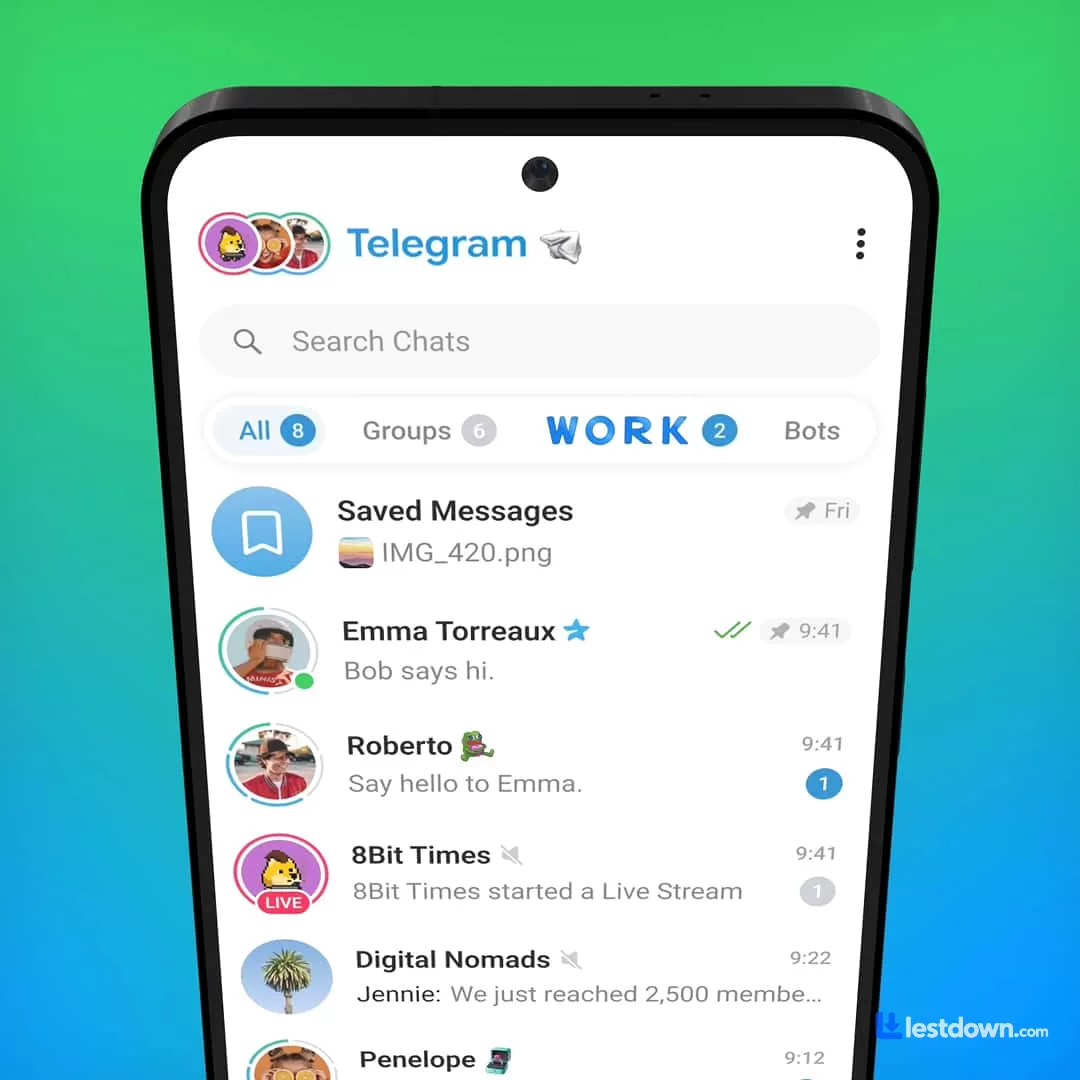
About Telegram
Okay, so real talk. Telegram isn't just a messaging app anymore. It's a messaging app, a social network, a news platform, a file-sharing service, and a community hub all rolled into one. And somehow, it's still free. Over a billion people use it every month, which means roughly one in ten people on Earth has it installed. That's insane.
The Basics (But Not Really Basic)
At its core, Telegram does what you'd expect: texts, voice messages, stickers, GIFs, photos, videos, and calls. You sign up with your phone number, your contacts sync automatically, and you're chatting in seconds. You can set a username so people can find you without your number, which is a nice touch for privacy. Group chats can hold up to 200,000 people. Let that sink in. That's not a group chat, that's a small city.
But here's where Telegram starts to separate itself from WhatsApp and the rest: Channels. Think of them as one-way broadcasts where admins post updates and unlimited subscribers just... read. You can follow channels for news, memes, crypto updates, fitness tips, whatever. There's a channel for basically everything. And they're not just for fun, governments and official organizations use them for announcements too. Verified channels have a checkmark so you know you're not following some random impersonator.
What's New in 2026 (And It's a Lot)
Telegram's been busy this year. Here's the stuff that actually matters:
Communities: A brand-new way to organize chats. Instead of having a dozen separate groups for related topics, you can now bundle them into a single Community with sub-chats. It's like Discord servers, but inside Telegram.
Rich Text Editor: Premium users can now write formatted posts with bold, italics, links, and even blog-style layouts directly in the app. No more Markdown hacks.
Ephemeral Bot Messages: Bots can now send messages that disappear after a set time in group chats. Useful for polls, games, or temporary announcements.
350 Million GIFs: Telegram's GIF search got a massive upgrade. You now have access to over 350 million GIFs. Good luck being productive ever again.
AI Summaries: Channel posts and Instant View pages can now be summarized by AI. If you don't have time to read a long article, you can get the gist in a few seconds.
Liquid Glass on iOS: If you're on an iPhone, Telegram now fully supports Apple's fancy translucent design language. It looks genuinely gorgeous.
And Yes, Video Calls Are a Thing
The original article you gave me said Telegram doesn't have video calls. That was true... in like 2020. Telegram introduced video calls back in 2020 and group video calls in 2021. As of 2026, group video calls support up to 1,000 viewers and unlimited audio-only listeners. Up to 30 people can broadcast video simultaneously, and the rest can watch. It's basically a full-blown webinar platform now. So yeah, that "no video calls" thing is ancient history.
Privacy and Security: This Is Where It Gets Complicated
Okay, here's where I have to be straight with you. Telegram markets itself as a privacy-first app, and in some ways it is. It doesn't show ads in your chats. It doesn't sell your data to advertisers. It has "Secret Chats" with end-to-end encryption. But, and this is a big but, regular chats and groups are NOT end-to-end encrypted. They're encrypted in transit and stored on Telegram's servers. That means Telegram itself can technically access them if it wanted to. Only "Secret Chats" are E2EE, and those are limited to one-on-one conversations. You can't have a Secret Group.
In September 2024, Telegram updated its privacy policy to say it will hand over a user's IP address and phone number to authorities in response to valid legal requests. That was a pretty big deal for a platform that built its reputation on privacy. Telegram's founder Pavel Durov has repeatedly said the app has never shared message content with anyone, and that it will leave markets rather than compromise encryption. But metadata is a different story. Telegram retains IP addresses, contact lists, and message timestamps.
There's also the moderation problem. Telegram's channels are largely unmoderated, which means it's become a haven for scams, phishing, and worse. A 2026 report found that over 20% of phishing spam emails were using Telegram's Bot API to steal credentials. That's not Telegram's fault directly, but it's a consequence of the platform's hands-off approach.
So if you're using Telegram for casual chatting and memes? You're fine. If you're a journalist, activist, or anyone who genuinely needs private communication? You should probably be using Signal instead. Signal encrypts everything by default, collects virtually no metadata, and is open-source. Telegram is more like "WhatsApp with better features and less encryption" than it is a true privacy tool.
How It Stacks Up Against the Competition
Telegram vs. WhatsApp: WhatsApp encrypts everything end-to-end by default. Telegram doesn't. WhatsApp is owned by Meta, which is a privacy nightmare in its own way, but at least the encryption is solid. Telegram has better features, bigger groups, channels, bots, unlimited file sharing. WhatsApp has better default security. Pick your poison.
Telegram vs. Signal: Signal is the gold standard for privacy. It's open-source, collects almost no data, and encrypts everything. But it has maybe 100 million users compared to Telegram's billion-plus. You can't talk to anyone on Signal. Telegram is where the people are.
Telegram vs. Discord: Discord is great for voice and community, but it's not really a messaging app in the same way. Telegram is more mobile-first and more private (relatively speaking). Different tools for different jobs.
The Annoying Stuff
Telegram's feature density is both its strength and its weakness. There's a learning curve. It's not as simple as WhatsApp or Signal. The interface is packed with options, and it can feel overwhelming at first. But once you get used to it, you'll appreciate how much you can do. Also, some privacy features, like disabling content sharing in specific chats, are locked behind Telegram Premium. That's a bit annoying for a platform that markets itself on privacy.
Should You Use It?
Look, if you want a messaging app that does everything, channels, massive groups, file sharing, bots, video calls with 1,000 people, Telegram is unmatched. It's free, it works on every platform (Windows, Mac, Linux, Android, iOS, web), and it syncs seamlessly across all your devices. The features are genuinely incredible.
But if your number one priority is privacy, you need to understand the trade-offs. Telegram is not Signal. It's not even WhatsApp in terms of default encryption. It's a feature-rich platform that happens to have some privacy features, not a privacy-first platform that happens to have some features. Go in with your eyes open, and you'll be fine.
Versions
| Version | Release date | Platform | File size | |
|---|---|---|---|---|
| Telegram 7.2.9 Latest version | Sep 8, 2026 | Windows | 53.1 MB | Download |